

Just to Recap: Over the course of the 3 previous sessions we have been focussing on the Sketchbook as an implement for learning and a record of visual thinking.
Each session included:
Each session included:
- sharing student sample sketchbooks
- participating in a variety of sketchbook practices taught by peers
- reflecting on the process of student thinking and making the thinking visible
The sessions were guided by these principles highlighted in Making Thinking Visible:
- Identifying Patterns and Making Generalizations(2/10)
- Generating Possibilities and Alternatives(2/10)
- Evaluating Evidence, Arguments and Actions(3/3)
- Formulating Plans and Monitoring Actions(3/3)
- Identifying Claims, Assumptions and Bias (4/7)
- Clarifying Priorities, Conditions and What is Known (4/7)
Here’s what we investigated at our most recent meeting.
O.P.T.I.C. investigation
Using the OPTIC method of inquiry, we examined an artwork by Chris Ware, a graphic artist, from his book Building Stories. Leveraging the appeal of graphic novels to teach students an impactful way to interact with artwork proves to be fruitful indeed. The conversation that stemmed from using this method of inquiry was rich, candid, and on topic, leading me to believe that there may be something to this OPTIC investigation.
|
This method of investigation was presented by Diane . At her school the AVID program, a socratic based teaching method, is utilized to benefit students that need assistance succeeding in our education system. We were presented with the OPTIC method of interacting with artworks. This graphic organizer scaffolds the user’s investigation by prompting different access points to the artwork.The prompts are:
Overview: What is the main idea/theme of the art? Parts: What are the formal elements at work in the art? Title: How does the title help explain the artwork? Interrelationships: How does this artwork connect to your experiences? Conclusion: A summary of the interconnections of the previous questions 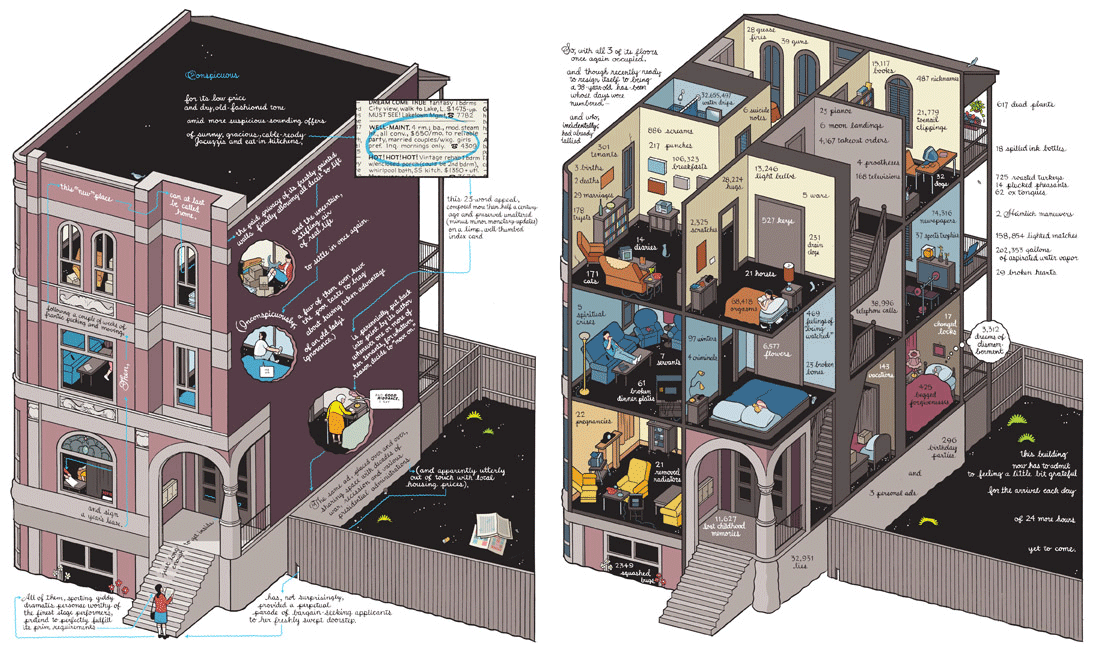
|
Evolving the sketchbook
|
Jody presented the sketchbook of the future, today! Leveraging the tech and machines that draw today’s students in, Jody has evolved the sketchbook for her digital media students.
“Digital idea journals can help make art-making more meaningful. Online website and blog technology helps capture research, show connections, and document learning–enhancing the creative process.”
|

Adding layers of digital research to the art-making process can create a more meaningful experience for the student and give the teacher consumable, quantifiable evidence of the learning and grappling that students are doing. “Used in the classroom, digital journals can actively engage students to outline goals, demonstrate progress, express self-reflections, and present influences and inspirations.”
With the proliferation of available FREE digital journal/sketchbook sites, digital journaling can be brought into the classroom with confidence. Jody relayed sites that she uses with her students:
Padlet lets you create walls of text and image as you research online, just drag and drop.
Visual thesaurus presents word definitions in a fun, playful manner.
Weebly is a user-friendly site builder, from blogs to digital galleries.
Pinterest is an easy way to collect and organize all those interesting things we come across while searching online.
Inkflow is an app that combines digital drawing, touch-screen writing, and digital images into one powerful digital journal.
I’m sure there are others out there we’re not familiar with, so let us know…
With the proliferation of available FREE digital journal/sketchbook sites, digital journaling can be brought into the classroom with confidence. Jody relayed sites that she uses with her students:
Padlet lets you create walls of text and image as you research online, just drag and drop.
Visual thesaurus presents word definitions in a fun, playful manner.
Weebly is a user-friendly site builder, from blogs to digital galleries.
Pinterest is an easy way to collect and organize all those interesting things we come across while searching online.
Inkflow is an app that combines digital drawing, touch-screen writing, and digital images into one powerful digital journal.
I’m sure there are others out there we’re not familiar with, so let us know…
NAEA in nolaA few of our members went to NAEA in New Orleans (jealous) and had many wonderful things to say about the conference and the city. Hopefully I can cajole those who went to share their experiences with us. Share them HERE
|

|
HOmework for may 5thResearch your name:
Why are you named what you are? What does your name mean/stand for? **Bring some collage-ables** |
The activity for our next meeting comes from State of Play–a method of teaching visual thinking through play:
“Play is an organized activity that is disguised as something fun and/or competitive. The form of play can be very structured (with rules and deep strategies, as in chess) or more loosely dened and open- ended (as in playing with blocks).
In a state of play, teaching and learning flow naturally, opening up opportunities for exploration and experimentation by every person in the room. Play is something students understand.” –Anthony Fontana *If you’d like to read more, click this: State of Play |
Spring sketchbook exp. pt. iii